Laser Tattoo Removal in Nagpur — Safe, Effective & Permanent Ink Removal
Advanced Q-switched laser technology for complete tattoo removal all colours, all skin types, performed by a trained cosmetic laser surgeon at Beautiphi Esthetic Clinics, Bajaj Nagar, Nagpur.
Tattoos are a permanent commitment until they are not. Whether your reasons for wanting a tattoo removed are personal, professional, or simply because your tastes have changed, laser tattoo removal at Beautiphi Esthetic Clinics, Nagpur offers a safe, clinically proven path to clear skin. We use advanced Q-switched laser technology the gold standard for tattoo removal worldwide to break down tattoo ink particles beneath the skin so your body can naturally eliminate them over time. Unlike older removal methods such as dermabrasion or surgical excision, laser removal is non-invasive, leaves the surrounding skin intact, and delivers gradual, progressive fading with each session. At Beautiphi, every tattoo removal procedure is performed by a trained cosmetic laser specialist who assesses your tattoo characteristics, skin type, and individual healing factors before designing your removal plan. The result clear, healthy skin where your tattoo once was is achievable. Let us show you how.
How Does Laser Tattoo Removal Work?
Understanding the science behind laser tattoo removal helps set realistic expectations — and explains why multiple sessions are needed rather than a single treatment.
The Laser and Ink Particle Mechanism
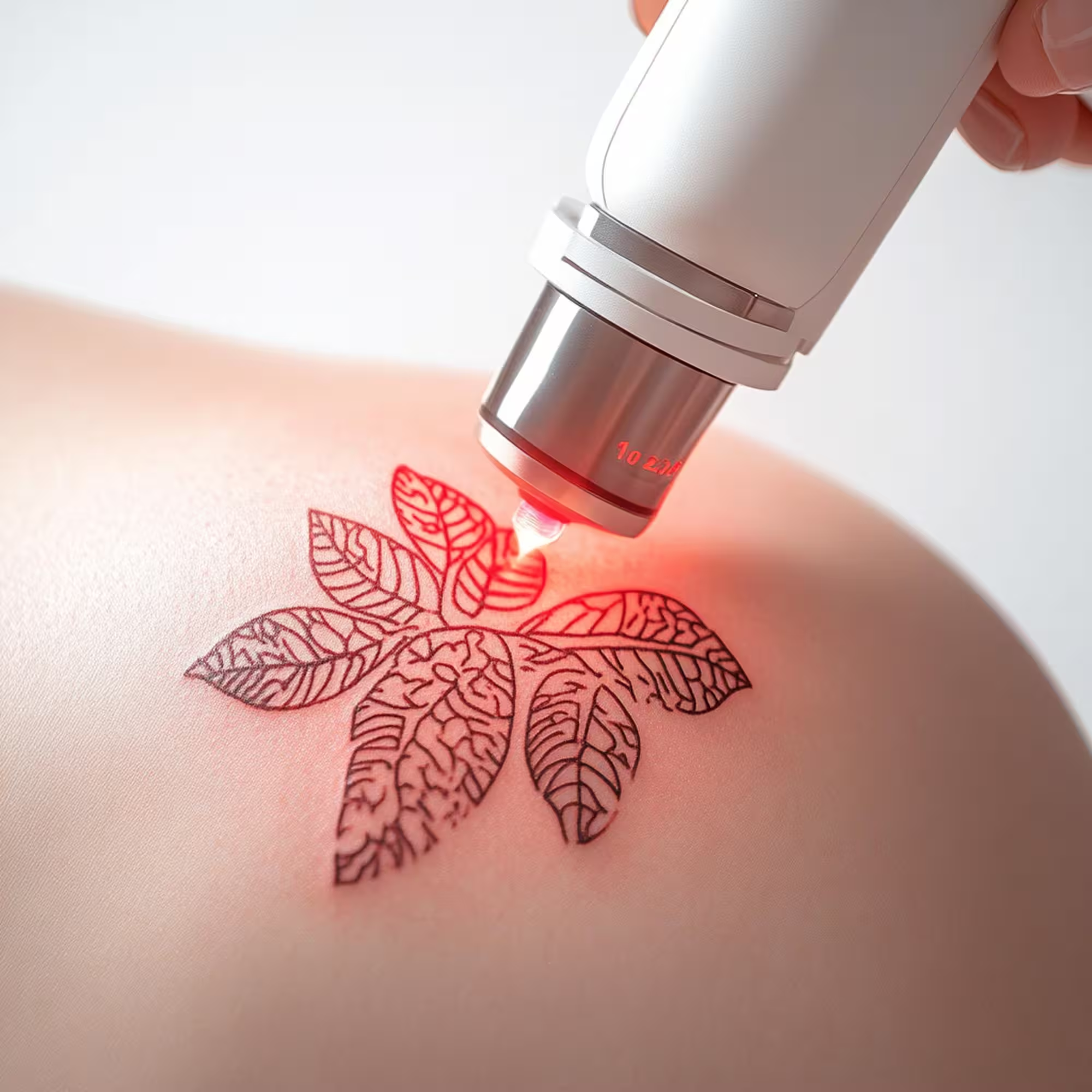
When a tattoo is applied, ink particles are injected into the dermis the deep layer of skin beneath the epidermis. These particles are too large for the body's immune system to naturally clear, which is why tattoos are permanent. Laser tattoo removal works by delivering ultra-short pulses of high-intensity laser energy into the skin the ink particles absorb this energy, heat up rapidly, and shatter into fragments small enough for the body's lymphatic system to carry away over the following weeks. This process is called photoacoustic fragmentation. With each laser session, more ink is fragmented and cleared progressively fading the tattoo until it is no longer visible.
Why Q-Switched Laser Is the Gold Standard
Q-switched lasers deliver energy in extremely short nanosecond pulses short enough to shatter ink particles without delivering significant heat to the surrounding skin tissue. This precision is what makes Q-switched lasers both effective and safe for tattoo removal. At Beautiphi, we use Q-switched Nd:YAG laser technology a platform capable of treating both black and dark-coloured inks (with the 1064nm wavelength) and red and lighter-coloured inks (with the 532nm wavelength), making it suitable for a wide range of tattoo types and skin tones.
Why Multiple Sessions Are Always Required
No tattoo can be removed in a single session and any clinic that claims otherwise is being dishonest. Multiple sessions are required because only a fraction of the ink in any given area is fragmented in each session, and the body needs time between sessions to clear the fragmented particles through the lymphatic system. Attempting to treat too frequently causes thermal damage to the skin without improving ink clearance. At Beautiphi, sessions are spaced 6–8 weeks apart to allow adequate healing and clearance between treatments.
How Many Sessions Will I Need?
This is the most common question — and the honest answer is that it depends on several factors specific to your tattoo and your skin. Here is a breakdown of the key factors that influence the number of sessions required.
Tattoo Ink Colour
Ink colour is one of the most significant factors in removal difficulty. Black and dark blue inks absorb the broadest range of laser wavelengths and respond most readily typically requiring fewer sessions. Red inks respond well to the 532nm wavelength. Green, turquoise, and purple inks are the most challenging they absorb a narrower range of wavelengths and often require more sessions or specialist laser platforms.
Ink Colour | Removal Difficulty | Sessions (Approximate) |
Black | Easiest | 4–8 sessions |
Dark blue | Easy | 5–8 sessions |
Red | Moderate | 6–10 sessions |
Orange / Yellow | Moderate–Difficult | 7–12 sessions |
Green | Difficult | 8–15 sessions |
Turquoise / Teal | Most Difficult | 10–15+ sessions |
White | Variable | 5–10 sessions |
Tattoo Age
Older tattoos generally respond better to laser removal than newer ones. Over time, the body's immune system gradually breaks down the outer layers of ink particles — making them more accessible to laser energy. A tattoo that is 10 years old will typically respond faster than one that is 6 months old.
Professional vs Amateur Tattoos
Professional tattoos are applied with a machine at consistent depth and density — the ink is well-distributed but penetrates deeper into the dermis. Amateur tattoos (hand-poked or done by inexperienced artists) often have uneven ink distribution and inconsistent depth — sometimes making them easier, sometimes harder to remove depending on the specific characteristics.
Tattoo Size and Location
Larger tattoos contain more ink volume and require more sessions to clear. Location also matters — areas with better circulation (upper back, chest) respond faster because the lymphatic system more efficiently clears fragmented particles. Areas with poor circulation (ankles, fingers, knuckles) respond more slowly.
Skin Type and Fitzpatrick Scale
Darker skin tones (Fitzpatrick IV–VI) require more careful laser parameter selection to avoid post-inflammatory hyperpigmentation — in some cases, lower energy settings are used for safety, which can mean more sessions are needed. At Beautiphi, our cosmetic laser specialist carefully calibrates every session for your skin type to ensure both safety and effectiveness.
Layered or Cover-Up Tattoos
Tattoos that have been covered up or modified by subsequent tattooing have multiple layers of ink at different depths — making them significantly more challenging to remove and requiring more sessions than a single-layer tattoo.
Our Laser Tattoo Removal Process at Beautiphi
01
Initial Consultation & Tattoo Assessment
Begin your tattoo removal journey with a detailed consultation, skin assessment, and treatment planning. We evaluate tattoo size, colours, depth, and skin type to estimate sessions and expected clearance results.
02
Patch Test
For first-time patients, a patch test on a small area of the tattoo is recommended before the first full session confirming your skin’s response to the laser energy and the appropriate settings for your skin type. Results of the patch test are reviewed at your next appointment.
03
Preparation Before Each Session
Avoid sun exposure to the tattoo area for at least 4 weeks before treatment. Do not apply fake tan or tanning products. Shave the treatment area if needed. Topical numbing cream can be applied at home 1–2 hours before your appointment if you prefer additional pain management.
04
The Removal Session
The treatment area is cleaned and numbed for comfort before laser application. Sessions are quick, with cooling and soothing care provided immediately after treatment to support safe healing and recovery.
05
Post-Treatment Care
Following each session, the treated area may be red, swollen, and occasionally blistered this is a normal healing response and not a complication. Keep the area clean, apply the prescribed aftercare ointment, avoid sun exposure, and do not pick at any scabbing or blistering. Most redness and swelling resolves within 3–7 days.
06
Session Intervals & Progress Review
Sessions are scheduled 6–8 weeks apart to support proper healing and ink clearance. Progress is monitored through photographs, and treatment sessions are adjusted based on your tattoo’s fading response.
Is Laser Tattoo Removal Safe for Indian Skin?
This is a critically important question and one that is often handled poorly by clinics that use a one-size-fits-all approach. Indian skin falls in the Fitzpatrick IV–VI range meaning it has higher melanin levels that compete with tattoo ink for laser energy absorption. If the laser is not properly calibrated for darker skin, the melanin in the skin can absorb energy alongside the ink, causing post-inflammatory hyperpigmentation, hypopigmentation (white patches), or even scarring.
At Beautiphi, our cosmetic laser specialist performs a detailed Fitzpatrick skin type assessment before every course of tattoo removal treatment. Laser parameters including wavelength, energy fluence, pulse duration, and spot size are all calibrated specifically for your skin type. We also use cooling between passes and space sessions adequately to minimise the thermal load on the skin. This careful, calibrated approach is what makes laser tattoo removal safe and effective for the diverse Indian skin tones of our Nagpur patients.
What Results Can I Realistically Expect?
Honest expectation-setting is one of the most important things we do at Beautiphi before beginning any tattoo removal program — because unrealistic expectations are the primary cause of patient dissatisfaction with an otherwise successful treatment course.
Complete clearance
achieving skin that shows no trace of the tattoo — is achievable for most black and dark blue tattoos, especially older ones with good skin tone. Most patients achieve 90–100% clearance after a full course of treatment.
Significant fading
70–90% reduction in tattoo visibility — is the realistic outcome for most multi-colour tattoos, newer tattoos, and tattoos on lower circulation body areas. Many patients choose to proceed with a cover-up tattoo at this stage rather than continuing to full clearance.
Partial fading
adequate lightening to allow a successful cover-up — is achievable in fewer sessions and is a popular option for patients who want to replace rather than completely r
A small number of tattoos
particularly those with certain green, turquoise, or white inks — may not achieve complete clearance even after many sessions. We will tell you honestly during consultation if complete clearance is unlikely for your specific tattoo.
Frequently Asked Questions — Laser Tattoo Removal Nagpur
The sensation during treatment is commonly described as a rubber band snap or the feeling of hot oil droplets on the skin brief and localised to each laser pulse. Most patients find it very tolerable, particularly for smaller tattoos. For larger or more sensitive areas, topical numbing cream significantly reduces discomfort. Pain level also varies by body location bony areas like ribs, ankles, and fingers tend to be more sensitive than fleshier areas like the upper arm or thig
In most cases, yes particularly for black ink tattoos on lighter Indian skin tones treated with a well-calibrated laser. Some patients experience temporary hypopigmentation (lightening) or hyperpigmentation (darkening) in the treated area, which resolves over several months. Very rarely, slight textural changes may persist in the skin this risk is minimised by proper laser calibration and post-treatment care. We discuss realistic skin outcomes thoroughly during consulta
Yes — once the area has fully healed and clearance is achieved, there is no barrier to getting a new tattoo over the same area. Many patients use partial fading to achieve sufficient lightening for a successful cover-up tattoo this typically requires fewer sessions than complete remova
Cost depends on tattoo size, number of colours, the number of sessions required, and the body location. Small tattoos cost less per session than large ones. We provide a per-session cost estimate during your consultation after assessing your tattoo. Package pricing for multiple sessions is available and offers better value than booking individual sessions.
Yes — permanent makeup tattoos on the eyebrows, lips, and eyeliner area can be removed with laser, though these require additional care due to the proximity to the eyes and the different inks used in cosmetic tattooing (which sometimes contain iron oxide pigments that can darken temporarily on first laser exposure). A patch test is essential before treating permanent makeup tattoos.
Book Your Laser Tattoo Removal Consultation in Nagpur
Whether you want to completely erase an old tattoo or lighten one enough for a cover-up, our specialist at Beautiphi Esthetic Clinics, Bajaj Nagar, Nagpur will give you an honest, detailed assessment of what is achievable for your specific tattoo and skin type and exactly how many sessions it is likely to take. No inflated promises. No hidden charges. Just a clear plan and expert execution.